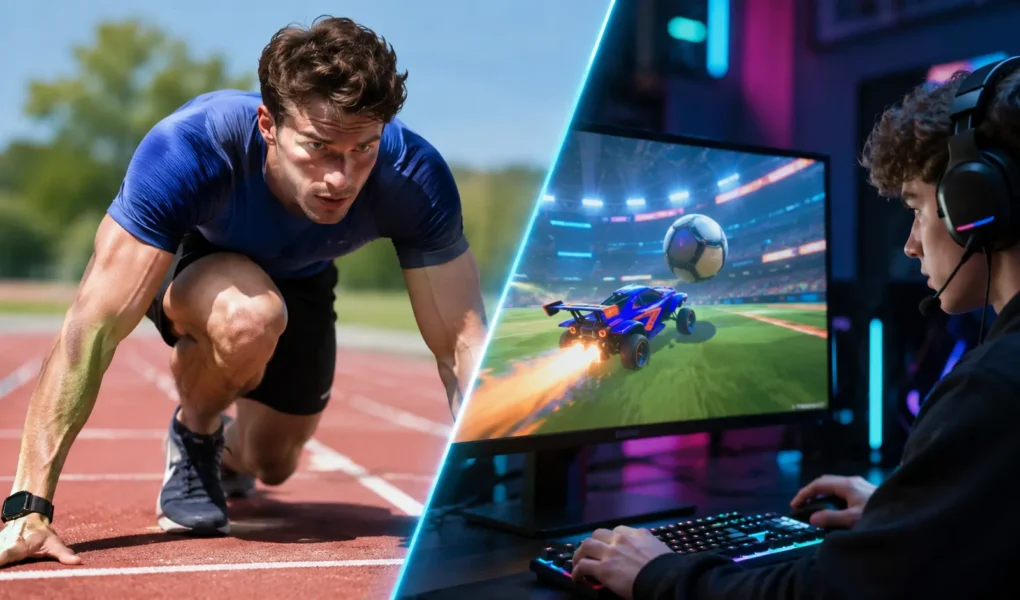
Traditional sports and competitive gaming may appear to belong to entirely different worlds, but they share several fundamental principles of performance. Successful athletes and professional esports players rely on discipline, strategic thinking, teamwork, mental resilience and consistent training to achieve their goals.
Rocket League, a competitive video game combining football with vehicle-based gameplay, provides an interesting example of how digital competitors develop skills that can benefit traditional athletes. Its fast-paced environment demands precise coordination, rapid decision-making and effective communication under pressure.
For triathletes, runners, cyclists, swimmers and team sports participants, understanding these approaches can introduce fresh perspectives on training and competition. While esports cannot replace physical conditioning, its performance strategies can complement traditional athletic development.
Why Are Traditional Sports and Rocket League More Similar Than Expected?
Traditional athletes and Rocket League players operate in competitive environments where small mistakes can significantly influence results. Both must understand their opponents, anticipate changing conditions and execute well-rehearsed techniques under pressure.
A triathlete, for example, must manage energy levels, assess race conditions and determine when to increase or reduce intensity. Similarly, a Rocket League player must manage boost resources, monitor opponents and identify opportunities to attack or defend.
Both disciplines reward competitors who combine technical proficiency with tactical awareness.
| Performance area | Traditional athletes | Rocket League players |
|---|---|---|
| Decision-making | Race strategy and positioning | Attacking and defensive decisions |
| Resource management | Energy and hydration | Boost management |
| Communication | Coaches and teammates | Team communication |
| Technical training | Movement and endurance drills | Mechanical skills and accuracy |
| Mental resilience | Recovering from setbacks | Maintaining focus after mistakes |
| Performance analysis | Race statistics and recordings | Match replays and gameplay data |
These similarities demonstrate that competitive gaming can offer useful lessons beyond the digital arena.
How Can Athletes Improve Their Reaction Times and Decision-Making?
Rocket League requires players to process rapidly changing information. They must monitor the ball, anticipate opponents’ movements and respond to teammates within extremely narrow timeframes.
Traditional athletes encounter comparable situations during competition. Cyclists respond to changes in group speed, swimmers adjust their positioning in open water, and runners evaluate when to accelerate.
Developing Situational Awareness
Competitive gaming encourages players to remain aware of their surroundings rather than focusing exclusively on immediate objectives. This principle is equally valuable in traditional sports.
Athletes can improve situational awareness through scenario-based training, controlled reaction drills and exercises that require decisions under fatigue.
For triathletes, practising unexpected changes in pace, challenging transitions and variable environmental conditions can help develop greater adaptability.
Making Effective Decisions Under Pressure
Elite competitors understand that making a reasonable decision quickly is sometimes more effective than pursuing a perfect decision too late.
Athletes can apply this principle by practising race-day scenarios and establishing clear strategies before competition. Familiarity with different situations can reduce hesitation and improve confidence when unexpected challenges arise.
What Can Traditional Athletes Learn About Structured Training?
One of the most valuable lessons from Rocket League esports is the importance of purposeful practice. Competitive players rarely depend exclusively on playing matches to improve their abilities. Instead, they dedicate time to developing specific mechanical and tactical skills.
The official Rocket League Academy highlights the importance of training routines, mindset development and targeted exercises.
Traditional athletes can adopt comparable methods by dividing their training programmes into smaller, measurable objectives.
Prioritising Quality Over Quantity
Training for longer periods does not necessarily guarantee better performance. Competitive gaming demonstrates the importance of identifying weaknesses and addressing them through focused repetition.
For triathletes, this could involve improving swimming technique, refining cycling cadence or reducing transition times rather than simply increasing overall training distance.
Combining targeted drills with a structured triathlon training routine can help athletes develop greater efficiency while maintaining a balanced approach to endurance development.
How Does Performance Analysis Help Athletes Improve?
Professional Rocket League players frequently review recorded matches to identify positioning errors, missed opportunities and inefficient decisions. This analytical approach allows competitors to understand weaknesses that may not be obvious during live gameplay.
Research published in PLOS ONE highlights the importance of technique, movement accuracy and strategic development within competitive esports training.
Digital gaming communities and specialist platforms such as RL Insider also demonstrate how dedicated online resources can support a wider understanding of competitive gaming ecosystems.
Traditional athletes can adopt a similarly analytical mindset by reviewing training sessions, examining performance statistics and identifying recurring patterns.
Using Data to Develop Better Training Strategies
Modern athletes have access to heart rate monitors, GPS trackers, cycling power meters and wearable fitness technology. These tools provide valuable insights into performance and recovery.
However, collecting information is only useful when athletes translate it into practical improvements.
A runner who consistently loses pace during the final stages of a race could investigate pacing, endurance and nutritional strategies. Similarly, a swimmer could analyse video recordings to identify inefficient movements.
Regular performance reviews allow athletes to establish realistic goals and measure progress more effectively.
Why Is Mental Resilience Important in Competitive Sports?
Rocket League matches can change dramatically within seconds. A missed opportunity or defensive mistake can quickly alter the outcome of a competition.
Successful players must learn to manage frustration and maintain concentration rather than allowing individual mistakes to affect subsequent decisions.
Traditional athletes face similar challenges when experiencing disappointing results, unexpected setbacks or difficult race conditions.
Learning to Recover from Mistakes
One of the most transferable esports lessons is focusing on the next opportunity instead of dwelling on previous errors.
A triathlete who experiences a slow transition cannot recover lost time by becoming frustrated. Instead, maintaining composure and returning to an appropriate race strategy can help prevent further mistakes.
Techniques such as controlled breathing, positive self-talk and pre-competition visualisation may support better emotional regulation.
Developing mental resilience takes consistent practice, just like improving physical endurance or technical ability.
How Can Teamwork in Rocket League Benefit Traditional Athletes?
Teamwork is central to competitive Rocket League. Players must coordinate their positioning, communicate intentions and understand when to attack or defend. Individual talent alone is rarely sufficient when teammates fail to work together effectively.
Although triathlon is primarily an individual sport, athletes still depend on coaches, training partners and support networks.
Building Effective Communication
Rocket League teams benefit from concise communication that provides relevant information without creating unnecessary distractions.
Traditional athletes can apply this approach when communicating with coaches about fatigue, training intensity and performance concerns. Clear communication also helps training partners establish shared expectations and maintain productive relationships.
Developing Trust and Accountability
Competitive players must trust their teammates to fulfil their responsibilities. Attempting to control every situation can disrupt team coordination and create unnecessary mistakes.
Similarly, athletes benefit from trusting their coaches, following agreed training programmes and accepting constructive feedback.
This collaborative approach creates an environment where continuous improvement becomes a shared responsibility.
What Can Athletes Learn About Resource Management?
Boost management is an essential component of Rocket League strategy. Players who exhaust their resources unnecessarily may struggle to respond effectively during important moments.
This concept closely resembles energy management in endurance sports.
Triathletes must distribute their physical effort across swimming, cycling and running. Using excessive energy during the opening stages can negatively affect performance later in the race.
Athletes can improve resource management by practising sustainable pacing, developing appropriate nutritional strategies and recognising early signs of fatigue.
Understanding when to increase intensity and when to conserve energy is an important competitive advantage.
How Can Traditional Athletes Develop Greater Adaptability?
Every Rocket League match presents different challenges. Opponents introduce unfamiliar strategies, teammates make unexpected decisions and competitive situations change rapidly.
Successful players adjust their approach rather than relying exclusively on predetermined tactics.
Traditional athletes can develop similar adaptability by incorporating varied training conditions into their routines.
For example, triathletes may encounter strong winds, changing water temperatures, challenging terrain or unexpected equipment problems. Preparing for different scenarios can improve confidence and reduce dependence on ideal competition conditions.
Adaptability also extends to long-term development. Athletes who experience performance plateaus should be willing to evaluate their training methods and introduce appropriate changes.
Can Traditional Athletes Apply Esports Training Methods?
Athletes can incorporate several principles from competitive gaming without disrupting their existing physical training programmes.
| Esports training method | Traditional sports application |
|---|---|
| Custom training exercises | Targeted technique drills |
| Match replay analysis | Race and training video reviews |
| Competitive simulations | Race-day practice sessions |
| Mental reset techniques | Emotional control during competition |
| Performance tracking | Weekly training assessments |
| Team strategy discussions | Regular coaching sessions |
Athletes exploring multisport training and preparation can combine these principles with endurance conditioning, recovery management and sport-specific technical development.
The objective is not to replace conventional athletic training but to introduce additional methods that encourage smarter and more consistent improvement.
Why Are Rest and Recovery Important in Both Competitive Environments?
Extended gaming sessions can contribute to mental fatigue, reduced concentration and declining decision-making accuracy. Competitive players therefore benefit from appropriate breaks and healthy lifestyle habits.
Traditional athletes face similar challenges alongside the physical demands of exercise.
Adequate sleep, balanced nutrition and properly scheduled recovery sessions help athletes maintain consistent performance. Rest should be regarded as an essential component of training rather than an interruption to progress.
Recognising the relationship between physical and mental recovery can support sustainable athletic development and reduce unnecessary fatigue.
Conclusion
Competitive Rocket League players offer traditional athletes valuable lessons in structured practice, tactical awareness, resource management, teamwork and mental resilience.
Although esports and physical sports involve different performance demands, both reward competitors who train deliberately, analyse mistakes and remain adaptable under pressure.
By incorporating selected esports-inspired strategies into conventional training programmes, traditional athletes can develop a more comprehensive approach to performance improvement.
For triathletes in particular, combining physical endurance with effective decision-making, emotional control and analytical thinking can support greater consistency and long-term competitive development.